Estimated reading time: 9 minutes
If your lower back tightens up after every run, stiffens mid-round, or stays locked no matter how much you stretch — the problem isn’t your back. It’s the system around it.
The lumbar spine is a responder, not a root cause. When the hips are immobile, when the thoracic spine can’t rotate, or when the deep core isn’t holding its share of the load, the lower back compensates. It overworks and compresses and It talks.
That’s the kinetic chain and it’s exactly what this 10-minute spinal mobility routine is designed to address.
Pain is the signal and longevity is the goal.
This routine helps you listen to the first so you can protect the second.
▶️ Watch the full 10-minute routine on YouTube
Why Most Back Routines Don’t Work
The default approach to a stiff lower back is to stretch it. Hold a forward fold. Roll on a foam roller. Maybe throw in a supine twist.
None of that is wrong — but none of it is enough.
Here’s why:
• Passive stretching creates temporary length, not lasting control
• Foam rolling addresses the symptom site, not the source
• Generic ‘core work’ often activates the wrong muscles — the big, global ones that already over-compensate
What the lumbar spine actually needs is mobility at the hips and thoracic spine so the lower back stops bearing load it was never designed to carry — combined with deep core stability so the segments stay supported when you move.
Every movement in this routine is selected to address that gap specifically.
The 10-Minute Sequence: What It Is and Why It’s Built This Way
This isn’t a random collection of feel-good movements. Each exercise is sequenced intentionally — starting with the nervous system, moving into joint mobility, building to stabilization, and closing with multi-plane spinal movement.
Full Sequence at a Glance
Timestamp Movement Target Area Muscles Why It’s Here
| Timestamp | Movement | Target Area | Muscles | Why It’s Here |
| 0:00 | Lateral Rib Breathing | Nervous system | Diaphragm, intercostals | Calms the CNS so tissue can actually release — a stressed body holds, not lets go |
| 0:33 | Pelvic Rocks & Clocks | Pelvis / lumbar | Hip flexors, lumbar multifidus | Wakes up the hip–spine connection before loading the spine directly |
| 1:28 | Dead Bug | Deep core | Transverse abdominis, psoas | Teaches stabilizers to fire independently — without the global muscles compensating |
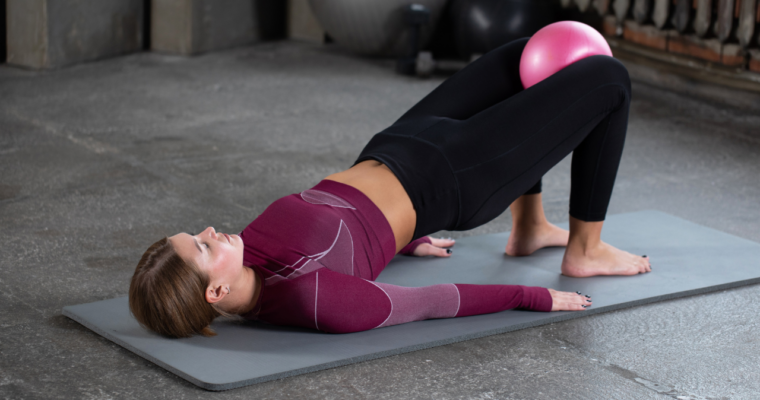
| 2:16 | Shoulder Bridge | Segmental spine | Glutes, hamstrings, erectors | Articulates one vertebra at a time, creating space and circulation through each segment |
| 3:16 | Clamshells & Leg Circles | Lateral hip | Glute medius, hip external rotators | Targets the stabilizers most under-recruited in runners and rotational athletes |
| 4:33 | Bird Dog Variations | Contralateral core | Multifidus, glute max, lats | Contralateral control — the pattern your body needs to stabilize during any unilateral movement |
| 5:45 | Mermaids, Child’s Pose & Twists | Lateral + rotational spine | QL, obliques, thoracic rotators | Closes with lateral flexion and rotation — the two planes most neglected in standard back routines |
0:00 — Lateral Rib Breathing: Start Here, Always
Most people skip the breath work and go straight to movement and that’s a mistake. When the nervous system is in a state of low-grade stress — which, for most active adults, it almost always is — muscles hold tension involuntarily. You can’t stretch your way out of that. You have to signal the system that it’s safe to release.
Lateral rib breathing activates the diaphragm, expands the lower thoracic cage, and shifts the body toward a parasympathetic state. This is the foundation every other movement in this sequence builds on.
0:33 — Pelvic Rocks & Clocks: Unlock the Hip–Spine Interface
Before you touch the spine directly, you mobilize what feeds it. The pelvis sits at the junction of the lumbar spine and the hips — when it’s restricted, both suffer.
Pelvic rocks and clocks restore small, controlled movement through anterior/posterior tilt and lateral rotation. They don’t look impressive. They work because they target the hip–spine connection precisely where most back pain originates.
1:28 — Dead Bug: The Stability Test Most People Fail
Dead bug is deceptively simple. The goal isn’t to move the limbs it’s to not move the spine while the limbs create load.
This is deep core training. Specifically, it targets the transverse abdominis and psoas in a pattern that mirrors what your spine needs during a running stride, a golf swing, or a serve. When those muscles can hold the spine stable through limb movement, the lower back stops compensating.
2:16 — Shoulder Bridge: Segmental Spinal Articulation
Most people do shoulder bridge as a glute exercise. That’s not wrong but it’s missing the point.
The value here is segmental articulation: rolling the spine up and down one vertebra at a time. This creates space between spinal segments, improves circulation to the discs, and restores movement quality that daily sitting compresses away.
Done slowly and with full attention, it also teaches the glutes and hamstrings to share the load — taking pressure off the lumbar extensors that work too hard in most athletes.
3:16 — Clamshells & Leg Circles: The Missing Link for Runners
The glute medius is one of the most under-recruited muscles in distance runners. It stabilizes the pelvis laterally during each stride. When it fatigues or doesn’t fire properly, the pelvis drops — and the lumbar spine torques to compensate.
Clamshells and leg circles target the glute medius and hip external rotators directly. For rotational athletes, these same muscles stabilize the follow-through and protect the lower back during deceleration.
4:33 — Bird Dog Variations: Contralateral Control
Bird dog is a contralateral stabilization exercise — opposite arm and leg extend while the core holds the spine steady. This pattern directly mirrors the demands of walking, running, and most athletic movement.
The lateral variation adds a rotational challenge that forces deeper engagement from the obliques and quadratus lumborum. If this feels hard to control, that’s important information about where your movement is breaking down.
5:45 — Mermaids, Child’s Pose & Twists: Moving Through Every Plane
The lumbar spine is designed to move through flexion, extension, lateral flexion, and rotation. Most people’s back routines include only the first two.
This closing sequence works through all four planes. Mermaids create lateral flexion. Child’s pose allows full flexion under no load. Twists restore the rotational mobility the thoracic spine needs to protect the lower back during every sport and daily activity.
This is where the “unlocking” feeling comes from — and why it lasts longer than a foam roll.
How This Applies to Your Sport
For Runners
Every running stride is a single-leg stance. Your pelvis has to stay level. Your spine has to resist rotation. When the hip stabilizers fatigue — usually somewhere between miles 3 and 6 — the pelvis starts to drop, the lumbar spine torques, and the lower back begins absorbing impact it shouldn’t.
The clamshells, leg circles, and bird dog variations in this routine directly address that failure pattern. Use the sequence post-run or on easy days as hip stabilizer maintenance.
For Golfers and Rotational Athletes
Rotational power comes from the thoracic spine, not the lumbar. When thoracic rotation is limited, the lower back tries to compensate — and that’s where injury risk concentrates.
The mermaid and twist sequence at the end of this routine restores thoracic mobility. The bird dog builds the core stability to control rotation without leaking force through the lower back. Both are non-negotiable for anyone swinging a club, racket, or paddle.
When to Use This Routine
This sequence is adaptable to your training schedule. Here’s how to apply it:
| Context | Use This Routine? | Duration |
| Pre-run / pre-round activation | Yes — skip the deep stretches and twists | 3–4 min |
| Post-training cool-down | Yes — full sequence | 10 min |
| Rest day maintenance | Yes — full sequence | 10 min |
| Acute tightness signal | Yes — prioritize pelvic rocks, dead bug, bridge | 5–7 min |
| Chronic or recurring pain | Supplement only — address root cause first | Varies |
Note: For pre-activity use, skip the child’s pose and deep twists — save full spinal flexion for after training.
Frequently Asked Questions
Most active adults benefit from 3–4 sessions per week. On training days, use the first half of the sequence (breathing through clamshells) as activation before activity. On rest days, run the full 10-minute sequence to maintain mobility without adding training stress.
Consistency matters more than frequency. A 10-minute routine four days a week produces significantly better results than an occasional longer session
The movements in this routine are low-load and designed to decompress rather than compress the spine. However, individual disc presentations vary widely. If you have an active herniation, work with your physical therapist or physician before starting any new movement practice — including this one. The dead bug and shoulder bridge are generally well-tolerated; the twists and forward flexion moves warrant professional guidance first.
Yes — with modification. Use the first four movements (breathing, pelvic rocks, dead bug, shoulder bridge) as pre-run activation. Skip child’s pose and the deep twists, which require more tissue cooling down than warming up. The clamshells and leg circles are especially valuable as pre-run glute activation.
Tightness that doesn’t resolve with stretching is usually a stability problem, not a flexibility problem. When the deep stabilizers aren’t doing their job, the global muscles stay contracted to protect the spine. Stretching releases that tension temporarily, but the body re-engages it quickly because the underlying instability hasn’t changed. This routine works differently — it builds the stability that allows the tightness to resolve.
Flexibility is passive range of motion — how far a muscle can lengthen when an external force is applied. Mobility is active range of motion — how much of that range you can control under your own power. This routine builds mobility, not just flexibility. That’s why the relief tends to last.
What’s Next
This 10-minute routine addresses the movement patterns most likely to be driving lower back tension. For the majority of active adults, it’s enough to maintain the hip mobility, spinal range, and deep core stability needed to train and compete without chronic pain.
If your back pain is recurring — showing up every training cycle, not just occasionally — the issue isn’t a missing stretch. It’s a specific biomechanical breakdown somewhere in your kinetic chain that needs to be identified and addressed systematically.
Watch the next video in the series to continue building control and strength through your hips, core, and spine — step by step.
About the Author
Clarissa Booker is a certified Pilates instructor, 200-hr RYT yoga teacher, and movement coach specializing in pain relief and performance longevity for active adults. She works with runners, rotational athletes, and anyone over 40 who wants to move without limitations — not just today, but for decades.