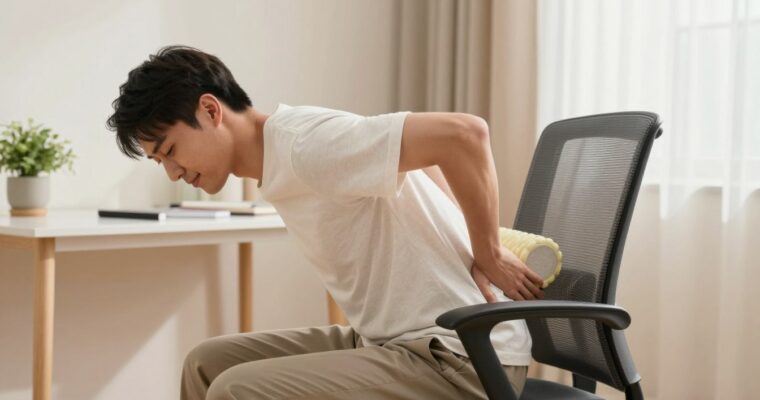
If you’re dealing with back pain that won’t quit, you’ve probably been told to “sit up straighter” or “fix your posture.” It’s not bad advice — but it’s incomplete. Poor posture is less about the position itself and more about what that position reveals: muscles that aren’t doing their job, a spine that’s lost its support system, and movement patterns that keep reinforcing the problem.
Here’s what’s actually going on — and what it takes to genuinely change it.
Why Posture and Back Pain Are Inseparable
Your spine isn’t designed to hold one fixed position all day. It’s designed to move — and to be supported through that movement by a coordinated team of muscles. When that system breaks down, your spine compensates. Over time, compensation becomes habit. Habit becomes pain.
The issue isn’t just that you’re slouching. It’s that when you slouch, certain muscles switch off and others get chronically overloaded. Your hip flexors shorten, your glutes stop firing. Your thoracic spine rounds forward and gets stiff. And your lumbar spine — your lower back — absorbs the load it was never meant to carry alone.
How Poor Posture Disrupts Spinal Alignment
When your spine is out of its natural alignment, load distribution becomes uneven. Spinal discs and joints absorb forces they weren’t designed to manage long-term. Slouching or sustained forward lean increases compressive pressure on the lumbar discs. Over time, this contributes to both wear and acute flare-ups.
Postural collapse can also drive structural adaptations — an excessive thoracic kyphosis or lumbar lordosis — that become harder to reverse the longer they go unaddressed.
The Role of Core and Back Muscles in Posture
Your core isn’t your abs. It’s a system — the transverse abdominis, multifidus, pelvic floor, and diaphragm working together to stabilize the spine from the inside out. When that system is underactive, the superficial muscles — your erectors, hip flexors, upper traps — compensate. That compensation is exhausting and creates the chronic tension and pain most people associate with “bad posture.”
The back muscles — lats, rhomboids, mid and lower trapezius — play an equally important role in keeping the thoracic spine upright and the shoulders properly positioned. Weakness here is one of the primary drivers of rounded shoulders and upper back fatigue.
Common Posture Patterns That Trigger Back Pain
Forward Head Position and Upper Back Strain
Every inch your head drifts forward of your shoulders, the effective load on your cervical spine roughly doubles. For runners and people who spend hours at a desk or on a screen, this is one of the most common — and most overlooked — contributors to chronic upper back and neck tension.
The fix isn’t just “pull your chin back.” It’s building the capacity of the deep neck flexors and upper back stabilizers to support the head from within, not just repositioning it momentarily.
Rounded Shoulders and Thoracic Pain
Rounded shoulders are often a symptom of a stiff, compressed thoracic spine — not the cause. When your mid-back can’t rotate and extend properly, your shoulders roll forward as a compensation. This creates a cascade: reduced shoulder mobility, increased strain through the rotator cuff, and a thoracic spine that gets progressively stiffer the more you try to stretch it.
Mobility work targeting thoracic rotation and extension — not just chest stretching — is what actually creates lasting change here.
Anterior Pelvic Tilt and Lower Back Issues
An anterior pelvic tilt means the front of your pelvis tips forward, increasing lumbar extension and compression. This is extremely common in runners, cyclists, and anyone with tight hip flexors from prolonged sitting. When the pelvis isn’t neutral, the lumbar spine absorbs load with every step, every rep, every hour at a desk.
The solution is a hip–spine connection reset: strengthening the deep core and glutes while releasing the hip flexors — not crunches, not foam rolling alone.
How to Assess Your Current Posture
Before you can address the problem, you need to understand what you’re working with.
The Wall Test for Spinal Alignment
Stand with your back against a wall, heels about 2–3 inches out. Your head, upper back, and sacrum should contact the wall. Slide your hand behind your lower back — if there’s a gap larger than 2–3 fingers, your lumbar curve is exaggerated. If you can barely fit a hand at all, your lower back is flat or flexed. Neither is ideal.
Mirror and Photo Assessment Techniques
View yourself from the front and side — either in a mirror or with a photo. From the front: are your shoulders level? Are your hips even? From the side: does your ear stack over your shoulder, hip, and ankle? These aren’t pass/fail observations — they’re data points to guide where your training attention needs to go.
Sitting Posture and Back Pain: Breaking the Cycle
Sitting compresses the lumbar discs, shuts off the glutes, and shortens the hip flexors — all at once. No ergonomic chair fully offsets this. What it can do is reduce the load while you’re in it.
Ergonomic Desk and Chair Setup Guidelines
- Feet flat on the floor or a footrest, knees at or just below hip height
- Hips slightly higher than knees to encourage a neutral lumbar curve
- Monitor at eye level — not tilted up or down — so your head stays stacked over your spine
- Keyboard close enough that your elbows stay at roughly 90 degrees, wrists neutral
- Documents or reference materials at eye level to reduce sustained neck flexion
Movement Breaks to Reset Your Posture
Movement breaks matter more than the chair itself. Set a timer for every 45–60 minutes. Stand, breathe, and do a brief reset: a few hip hinges, a thoracic rotation, a standing hip flexor stretch. Two to three minutes is enough to interrupt the compression pattern. Over the course of a full workday, this is one of the highest-leverage habits you can build.
Standing Posture: Avoiding Hidden Sources of Back Strain
Poor standing posture tends to be more subtle — and for that reason, often goes uncorrected longer than seated posture problems.
Proper Weight Distribution Principles
Most people habitually shift onto one hip or hyperextend one knee. Over time, this creates asymmetrical loading through the pelvis and lumbar spine. The goal is even weight through both feet, knees soft rather than locked, and a light engagement of the deep core — not a rigid military brace.
How Your Shoes Affect Spinal Alignment
Footwear has a direct effect on your standing posture. High heels shift the pelvis into anterior tilt and increase lumbar compression. Completely flat, unsupportive shoes can flatten the arch and create a chain reaction up through the knee, hip, and lower back. Look for moderate arch support and a heel-to-toe drop that doesn’t significantly alter your natural gait.
How Your Sleep Position Influences Posture and Back Pain
Sleep is when your nervous system and tissues recover. The position you hold during those hours matters more than most people realize.
Selecting the Right Mattress and Pillow
A medium-firm mattress is a reasonable starting point for most people — supportive enough to maintain spinal alignment, with enough give to reduce pressure points at the hip and shoulder. Your pillow should keep your head in a neutral position. Side sleepers typically need more loft to fill the space between the ear and shoulder; back sleepers need less.
Optimal Sleeping Positions for Spinal Health
- Back sleeping with a pillow under the knees reduces lumbar compression and keeps the spine in a relatively neutral curve
- Side sleeping with a pillow between the knees keeps the hips stacked and prevents the top hip from rotating forward, which strains the SI joint and lower back
- Stomach sleeping forces the cervical spine into sustained rotation — the hardest position to make work. If it’s unavoidable, a thin pillow under the pelvis can reduce lumbar extension somewhat
Technology and Posture: The Digital Age Impact on Your Back
The issue isn’t technology itself — it’s that most of us use it in positions that keep us in sustained flexion for hours. Looking down at a phone or working from a laptop that sits flat on a desk both drive the same problem: forward head position and thoracic compression, held for extended periods.
Text Neck Syndrome and Prevention
Text neck develops from the cumulative load of holding the head forward and down — typically while looking at a phone or tablet. Prevention comes from habit adjustment: raising the device to eye level rather than dropping your head to meet it, taking regular breaks to decompress the cervical spine, and building the neck and upper back endurance to sustain better position throughout the day.
Ergonomic Solutions for Smartphones and Laptops
- Use an external keyboard and elevate your laptop so the top of the screen is at eye level
- Hold your phone closer to face level rather than looking down at lap height
- Build in posture resets every 30–45 minutes: head retraction, shoulder blade retraction, thoracic extension
Targeted Exercises to Correct Poor Posture
Stretching alone won’t fix postural problems — you need to build the stability and motor control to actually hold a better position. This is where Pilates-based training is especially effective.
Core Strengthening for Spinal Support
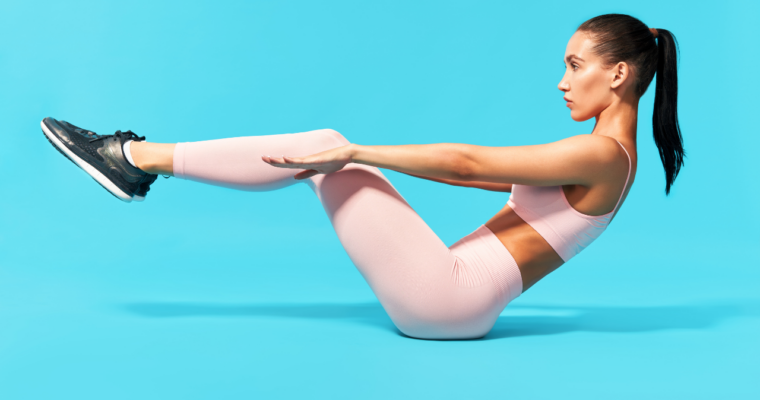
The goal is deep core activation — the transverse abdominis, multifidus, and pelvic floor working in coordination — not superficial crunching.
Dead bug: Builds deep core stability while keeping the lumbar spine in neutral. Work slowly with full breath control throughout each rep.
Glute bridge: Activates the posterior chain and teaches posterior pelvic tilt. Focus on the tilt at the top, not just the height of the lift. Hold 2–3 seconds before lowering.
Upper Back and Chest Opening Stretches
Pair pectoral tissue release (doorway or strap stretch) with thoracic mobility work — thread-the-needle rotations and extension over a foam roller or rolled towel. Stretching the chest without mobilizing the thoracic spine gives you half the result.
Hip Flexor and Glute Activation Exercises
Half-kneeling hip flexor stretch: More effective than a standing lunge for accessing the psoas. Maintain a posterior pelvic tilt throughout — don’t let the low back extend to compensate.
Single-leg glute bridge: Adds the challenge of pelvic stability and addresses common left-right asymmetries in hip extension strength.
Exercises matter — but so does how you move through ordinary life.
Mindful Movement Techniques
Mindful movement means noticing your body’s position throughout the day: when you’re carrying groceries, reaching overhead, sitting at a red light, or lifting something off the floor. Small positional corrections made consistently throughout the day compound in a way that a single weekly stretch session cannot.
Breath is an underused tool here. Learning to use your breath to engage the deep core — instead of bracing through the superficial muscles — changes how your spine is supported in every position you’re in.
Stress Management for Better Posture
Chronic stress drives muscle guarding, particularly in the upper traps, jaw, and hip flexors. This is a direct, physiological relationship — not a metaphor. Breathwork, structured rest, and movement practices that include a nervous system downregulation component — like Pilates or restorative yoga — address the root driver, not just the surface tension.
When to Consult Professionals About Posture-Related Pain
If your pain has lasted more than a few weeks, is affecting your sleep or training, or is worsening despite your efforts, get an assessment. A physical therapist or movement specialist can identify specific compensation patterns, instability issues, or structural factors that self-directed work can’t address.
Physical Therapy and Posture Retraining
A skilled physical therapist will assess your movement patterns, identify the specific compensation strategies driving your pain, and build a progressive plan to address them. Expect a combination of manual therapy, targeted exercise, and movement retraining — including guidance on how to load your body in daily life without reinforcing the problem.
Chiropractic, Massage, and Other Therapeutic Approaches
Chiropractic care and massage therapy can play a useful role — particularly in reducing acute tension and restoring range of motion so that movement-based retraining becomes accessible. Osteopathic manipulation and physical medicine are also options worth exploring depending on your situation. These are tools to use alongside a movement practice, not in place of one.
Creating Your Personalized Posture Improvement Plan
Start with your assessment. Identify the one or two patterns that feel most familiar — the ones you recognize in yourself. Pick two or three targeted exercises and add them to what you’re already doing. Build in movement breaks. Be consistent.
Postural change is gradual, because it’s habit change. But the payoff — for your back, your training, and your long-term movement capacity — is real.
Want a structured starting point? Watch the free video for a quick pilates session to help release back pain — and the Pilates-based corrections for each one. Or download the Back Pain Blueprint for a simple, actionable checklist you can start using today.
1 thought on “Posture and Back Pain: What’s Actually Going Wrong (and How to Fix It)”
Comments are closed.